

The Industrial Guide to
Green Building
Build green without bleeding green — sustainability that makes financial sense.
- INDUSTRIAL TRENDS
Why Green Building + Sustainability Matter in industrial development
Industrial real estate is evolving rapidly, and sustainability is no longer an optional feature — it’s a competitive advantage. With rising energy costs, stricter building codes, and increasing demand from investors and tenants for ESG-compliant spaces, those who integrate sustainability into their projects are positioning themselves for long-term success.
While LEED (Leadership in Energy and Environmental Design) remains the most widely recognized green building certification, sustainability in industrial development isn’t limited to formal certification. Many developers and landlords are adopting “green-ready” design strategies — high-efficiency systems, sustainable materials, water conservation, and healthier indoor environments — that deliver real operational and financial benefits with or without pursuing a LEED plaque. These strategies attract ESG-conscious tenants, reduce operating costs, and future-proof assets against tightening regulations.
Incorporating sustainability into industrial development means:
- Lower Operational Expenses – Energy-efficient systems reduce long-term costs for owners and tenants alike. Green buildings consume an average of 25% less energy than conventional buildings.
- Stronger Marketability – ESG-conscious corporations, brokers, and investors actively seek sustainable industrial spaces. LEED-certified buildings command a 3–8% rent premium.
- Regulatory & Code Compliance – Future-proof assets against stricter energy and emissions mandates. The 2024 IECC improves commercial energy efficiency requirements by approximately 10% over the 2021 code.
- Higher Asset Value & Tenant Retention – Green buildings command higher lease rates and attract quality tenants. Owners report an average 9% increase in asset value for green-certified buildings.
Sources: USGBC; CBRE “Green Is Good: The Enduring Rent Premium of LEED-Certified U.S. Buildings” (2024); International Code Council, IECC 2024; Green Building Statistics, Resimpli (2025).
GREEN-READY WITHOUT THE PLAQUE
GREEN-READY WITHOUT THE PLAQUE
KEY STRATEGIES FOR
LEED + SUSTAINABILITY
IN INDUSTRIAL DEVELOPMENT
SMART SITE SELECTION
Redevelop brownfields or previously used sites to minimize environmental impact.
Choose locations with public transit access, EV charging, and bike storage for LEED credits.
Use bioswales, permeable paving, and other natural stormwater management solutions.
ENERGY EFFICIENCY & RENEWABLES
Use high-efficiency HVAC, LED lighting, and smart controls to cut energy costs.
Integrate solar panels or other renewables to reduce reliance on fossil fuels.
Install enhanced insulation and cool roofs to lower heating and cooling demands.
SUSTAINABLE MATERIALS + WASTE REDUCTION
Specify locally sourced, recycled, and low-VOC materials for better air quality.
Implement a construction waste plan to reduce landfill use and earn LEED credits.
Design for future adaptability to minimize material waste over time.
WATER CONSERVATION
Install low-flow plumbing and drought-resistant landscaping to cut water use.
Use rainwater harvesting for irrigation or cooling.
Implement industrial water recycling systems to reduce demand on municipal supplies.
HEALTHIER INDOOR ENVIRONMENTS
Improve ventilation and air quality for occupant well-being.
Maximize daylighting with skylights and large windows to reduce lighting costs.
Use non-toxic paints, adhesives, and finishes to create a healthier workspace.
These strategies not only support LEED certification but also improve operational efficiency, reduce costs, and enhance long-term asset value.
The Business Case for Sustainable Industrial Development
For industrial real estate stakeholders, sustainability isn’t just a trend — it’s a strategic advantage that aligns with corporate ESG goals, reduces operating costs, and enhances asset value. Modern industrial design already integrates many green strategies — energy-efficient lighting, enhanced insulation, water conservation, and site optimization — making sustainability more accessible than ever, with or without formal LEED certification.
Financial & Operational Benefits
- Lower Operating Costs – Green buildings see an average operating cost reduction of 10.5% in year one and 16.9% over five years. Reduced energy and water usage translate directly into lower utility expenses and maintenance costs.
- Increased Building Performance – High-efficiency HVAC, LED lighting, and automated building systems improve operational reliability, reduce downtime, and deliver 15–30% energy savings through whole-building optimization.
- Stronger Tenant Appeal – Sustainability-focused buildings attract high-quality, publicly traded corporations with ESG commitments. Even without LEED certification, demonstrable green features increasingly influence lease decisions.
- Higher Asset Value – Green-certified buildings command 3–8% rent premiums and experience greater tenant retention and lower vacancy. Owners report an average 9% increase in asset value.
- Access to Incentives – Many Texas municipalities offer incentives for green buildings. Houston’s Tax Abatement Program provides partial tax abatement for LEED-certified commercial buildings. Austin and other cities offer expedited permitting and fee reductions.
Sources: Green Building Statistics, Resimpli (2025); CBRE “Green Is Good” (2024); Whole Building Design Guide (WBDG); City of Houston Green Building Resource Center (codegreenhouston.org); USGBC.
Building Code Alignment Reduces Cost Premium
Due to evolving energy and building codes, many municipalities already require design and construction elements that align with LEED standards and green building best practices. This means the additional cost premium for certification — or for simply building sustainably — is often lower than expected.
- Cool Roof Requirements — IECC 2021/2024 mandates minimum solar reflectance (SRI 64) for low-slope roofs in Climate Zones 0–3, which includes all of Texas. This aligns with LEED Heat Island Reduction credits.
- Low-VOC Materials — Increasingly specified in standard practice to meet indoor air quality requirements. LEED v5 moved low-emitting materials to the Materials and Resources category as a holistic material health attribute.
- High-Efficiency Lighting & HVAC Equipment — Code-minimum equipment is now significantly more efficient than even five years ago, reducing the incremental cost to achieve LEED energy credits.
- Stormwater Management & Site Design — Many Texas municipalities mandate detention, filtration, and low-impact development strategies that directly overlap with LEED Rainwater Management credits.
Sources: International Code Council, IECC 2021/2024; Cool Roof Rating Council; USGBC LEED v5 BD+C (April 2025).
Meeting Market & Corporate ESG Demands
Investors, tenants, and regulatory bodies are increasingly prioritizing ESG compliance and sustainability metrics. Whether through LEED certification or documented sustainable design practices, green building strategies help:
- Align with corporate sustainability commitments and ESG reporting requirements.
- Strengthen corporate reputation and community relations.
- Future-proof assets against evolving regulations and carbon reduction targets.
- Differentiate projects in a competitive industrial market.
How much does green cost?
Building sustainably for an industrial tilt-wall project involves additional costs that vary based on the level of certification or sustainability measures pursued. Below is a breakdown of estimated cost premiums as a percentage of total construction cost for projects pursuing LEED certification.
Even without formal certification, many of these strategies can be implemented selectively to improve building performance and tenant appeal.
A NOTE ON POWER
AMPING UP CAPACITY
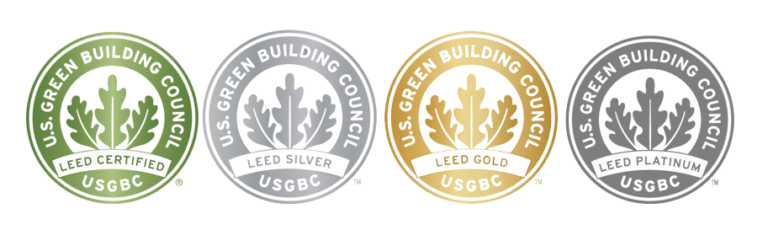
Cost Component | Baseline (Non-LEED) | LEED Certified 40-49 pts | LEED Silver 50-59 pts | LEED Gold 60-79 pts | LEED Platinum 80+ pts |
|---|---|---|---|---|---|
Estimated Total Cost Premium | — | +1-3% | +2-5% | +3-7% | +8-15% |
Soft Costs (Design, Engineering, Documentation) | — | +1–2% | +1.5–3% | +2–4% | +4–7% |
Hard Costs (Construction Premiums) | — | +0–2% | +1–3% | +2–5% | +5–11% |
USGBC Fees & Commissioning | — | +0.25–0.5% | +0.25–0.5% | +0.5–1% | +0.5–1.5% |
Sources: U.S. Green Building Council (USGBC); GSA LEED Cost Study (Steven Winter Associates, Inc.); Davis Langdon, Cost of Green Revisited (2007); World Green Building Council, Business Case for Green Building (2013).
Premiums: Estimated percentages are based on industry studies and project data. Pursuing LEED Certified through Gold typically adds 1–7% of total construction cost. Many industrial projects achieve Certified or Silver at minimal premium when sustainability is integrated early in design.
Variability: Actual costs vary based on project specifics, regional factors, market conditions, and when in the design process sustainability goals are established. Early integration typically reduces premiums significantly.
LEED Process
+ Timeline
You’re already planning, designing, building, and commissioning your project. The timeline below shows the additional time LEED certification or sustainable design practices add to each phase. Actual durations vary by project size and complexity.
Phase | Additional Time For LEED | What LEED / Sustainability Adds |
|---|---|---|
Planning & Pre-Design | +1–4 weeks | Goal-setting, LEED scorecard, rating system selection, LEED AP / CxA integration |
Design | +2–4 weeks | Energy modeling, sustainability specifications, LEED documentation, preliminary USGBC submission (optional) |
Post-Occupancy & Certification | +0–4 weeks | Material tracking, waste diversion documentation, enhanced commissioning (CxA), envelope testing (mandatory in LEED v5) |
Clear Height | +12–24 weeks | Final commissioning adjustments, USGBC package submission & review (must submit within 2 years of substantial completion) |
Note: Post-occupancy is the only phase that is primarily LEED-driven. Planning, design, and construction time additions are modest when sustainability goals are established early. Projects pursuing green-ready strategies without formal LEED certification can skip the USGBC submission phase entirely.
What Each Phase Involves
Planning & Pre-Design (+1–4 weeks)
- Define sustainability goals & target certification level (LEED Certified, Silver, Gold, Platinum — or green-ready without formal certification).
- Select LEED rating system if pursuing certification (typically BD+C: Warehouse & Distribution Centers, or BD+C: Core & Shell).
- Conduct feasibility study & preliminary LEED scorecard assessment.
- Integrate LEED AP or sustainability consultant into the project team early — LEED v5 requires commissioning authority (CxA) engagement by end of Design Development.
Design (+2–4 weeks)
- Schematic Design: Energy modeling, water efficiency strategies, sustainable system selection.
- Design Development: Finalize MEP systems, material selection, stormwater management strategies.
- Construction Documents: Specify LEED-compliant or sustainability-aligned systems, waste management plans, and IAQ requirements.
- Preliminary LEED Submission (optional): Submit early credits for USGBC review.
Construction (+0–4 weeks)
- Implement sustainability strategies on-site: pollution prevention, construction waste diversion, energy-efficient system installation.
- Track materials and MEP installations for credit documentation.
- Conduct commissioning (CxA): air quality testing, performance verification. LEED v5 now requires mandatory building envelope commissioning including air leakage, water penetration, and infrared imaging testing.
Post-Occupancy & Certification (+12–24 weeks)
- Performance verification & final commissioning adjustments.
- Submit final LEED package to USGBC (must be submitted within 2 years of substantial completion). Certification review typically takes 12–24 weeks.
- Receive certification and educate tenants/staff on sustainable operations.
- LEED v5 Enhanced Commissioning includes a 3-year post-occupancy monitoring commitment (MBCx) for ongoing performance verification.